Guides
The best day and time to send B2B email campaigns (Part 2)
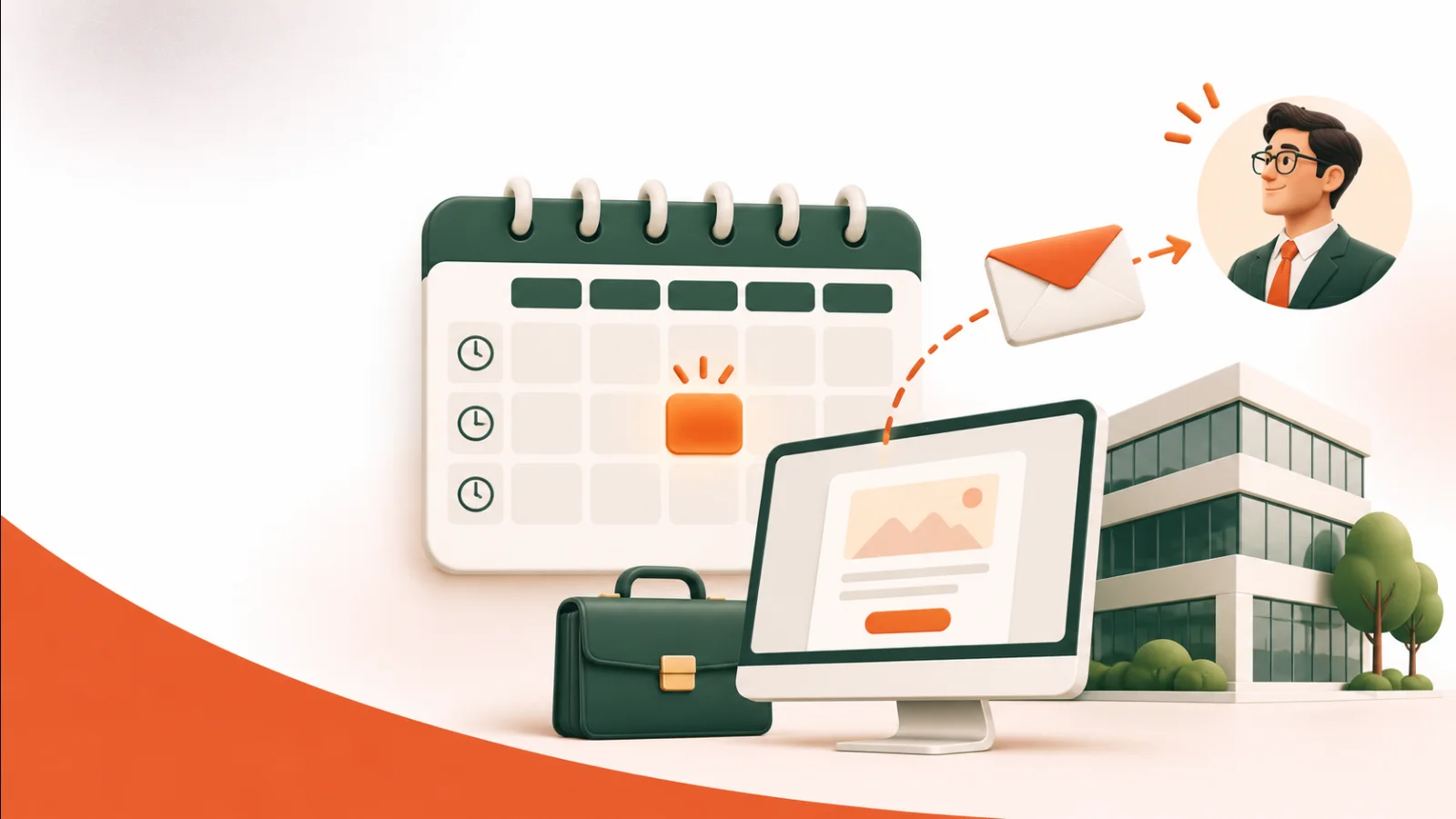
In Part 1 we looked at retail customers, who read promotional email in their free time. Business readers are different. They read at work, between meetings, and they decide with their colleagues. That changes the best moment to reach them.
As in Part 1: there is no single best time that works for every company. Use the ideas below as a starting point and let your own results decide.
Work with the working day
Most B2B email is read during working hours, on a computer, often in short gaps between other tasks. Think about the shape of a typical office day:
- Early morning: people clear their inbox when they arrive. Your email competes with everything that came in overnight, but it is also when people are deciding what to deal with today.
- Late morning: the first rush is over and there is room to read something properly.
- Lunch: many people step away from their desk. In Indonesia, remember that on Friday many colleagues go to Friday prayers around midday, so the break is longer.
- Afternoon: meetings and deadlines take over, and the end of the day is about finishing, not reading.
Choose the right day of the week
- Monday is often about planning and catching up. An email may be skimmed and left for later.
- Tuesday to Thursday are the main working days, when people have time to read and act.
- Friday tends to be shorter and focused on wrapping up the week, especially in the afternoon.
- Weekends are usually quiet for business email, except for audiences such as owners of small businesses who also work on weekends.
Follow the business calendar
The time of year matters as much as the time of day:
- Public holidays and cuti bersama: many offices are empty, and email waits until people return. Avoid sending important campaigns right before a long holiday.
- Ramadan: working hours often shift, and many people start and finish earlier.
- Budget and planning cycles: companies plan purchases at certain times, such as the end of a quarter or before the new financial year. Proposals and offers are more relevant then.
- Month end: finance and operations teams are busy closing the books, so it may not be the moment for a long read.
Know who you are writing to
"B2B" covers many different people. A business owner, an IT manager and a procurement team read email at different times. If your list includes several roles, segment by role or company type and test each group separately. Remember the time zones too: a company in Makassar works on WITA, one hour ahead of Jakarta.
Good starting points for B2B
If you have no data yet, these are reasonable first guesses:
- Tuesday to Thursday, mid to late morning
- Early afternoon, after lunch, for short updates
- Avoid Friday afternoon, the days just before long holidays and late evenings
Again, these are starting points to test, not rules.
Test it with your own list
- A/B test the send time. Flashmail's A/B test can compare send times as well as subject lines and content.
- Measure what matters for B2B. Clicks, replies, demo requests and form submissions tell you more than opens alone.
- Test over several campaigns. B2B lists are often smaller, so one test can be noisy.
- Check the report to see when people actually opened and clicked over time.
Do not forget triggered email
Not every B2B email belongs on a schedule. A welcome series after someone downloads a guide, a follow-up after a demo request, or a reminder before an event works best when it follows the person's own action. Flashmail automation sends these at the right moment. See Marketing Automation and Flashmail for corporate teams.
Checklist
- Send during working hours, mid-week as a starting point
- Plan around holidays, Ramadan working hours and budget cycles
- Segment by role and region, and mind the time zones
- A/B test send times over several campaigns
- Judge by clicks, replies and leads
Selling to consumers too? Read Part 1: the best time to send retail email campaigns.